

Table of Contents
- Doggy Fashion in 2026: What's Trending Now
- How to Measure a Dog for Clothes (Fit That Actually Works)
- Comfortable Dog Clothing: Safety Signs and Fabrics to Look For
- Dog Clothes for Cold, Rain, and Heat: Weather and Breed Picks
- Materials, Care, and Making Dog Clothes Last
- Dog Fashion Show Moments and DIY Customization
- Conclusion: Dressing Your Dog Well Starts With Fit
- Frequently Asked Questions
Last Updated: October 5, 2026
Doggy Fashion in 2026: What's Trending Now
Doggy fashion is the practice of dressing dogs in clothing and accessories that balance style, comfort, and practicality. This guide from Waggy World breaks down what's trending in 2026, how to measure for a proper fit, and which fabrics keep your pup comfortable in every season.
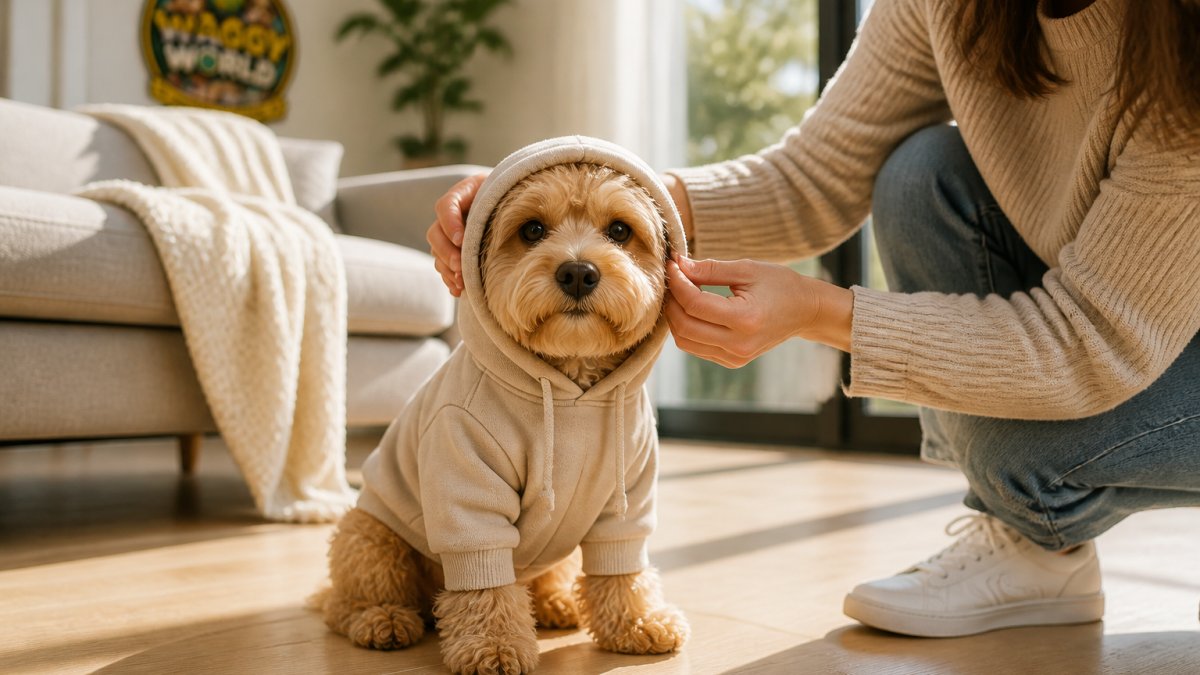
The Two Lanes of Doggy Fashion
Before you shop, decide which lane you are dressing for. Practical pieces are worn for a reason: warmth on a cold morning, rain protection on a wet walk, or a cooling bandana in summer. Personality pieces are worn for expression: a bandana that matches your jacket, a jersey for game day, a birthday hat for a photo. The mistake most owners make is buying personality pieces and expecting them to perform like practical ones, a knit sweater with a decorative bow is not a raincoat.
Streetwear, Cottagecore, and Retro Sport
Streetwear leads the pack: hoodies, matching leash-and-shirt sets, and varsity-inspired layers that mirror human trends. A streetwear look comes together from three pieces, a hoodie or crewneck base, a coordinating leash or harness, and one statement detail like a logo patch or reflective stripe.
The throughline: dog clothing now mirrors what owners already wear, so pets look like an extension of the household rather than a novelty.
Accessories That Pull an Outfit Together
A bandana collar does more work than a full outfit. It adds personality in seconds, works for everyday walks and photo shoots alike, and costs far less than a wardrobe overhaul. Bow ties, scarves, and lightweight collars round out the accessory layer.

Match accessories to the dog's coat and body shape rather than to a trend. Light-colored coats show dirt and dye transfer from cheap fabrics, so wash new accessories before the first wear; dark coats swallow dark accessories, so a contrasting color reads better in photos.
How to Build a Capsule Wardrobe for Your Dog
A capsule approach keeps doggy fashion practical and affordable. Most owners find that four to six well-chosen pieces cover nearly every situation:
- One weatherproof coat sized to your dog's chest girth, for rain and cold wind.
- One insulating layer, a fleece or knit sweater, for dry cold days.
- One lightweight shirt or cooling bandana for mild weather and summer walks.
Build the capsule around fit and fabric first, then add personality, a capsule built this way means every piece in the drawer actually gets worn.
Trends Worth Skipping
Not every trend translates well to a dog. Long dangling ties, loose beads, or small detachable parts are choking or snag hazards; tight elastic bands around the legs or neck can restrict circulation; heavy embellishments like metal studs or thick faux fur add weight and heat most dogs tolerate poorly on a walk. If a trend only works in a photo and not on a walk, treat it as a photo prop, not a wardrobe staple.
How to Measure a Dog for Clothes (Fit That Actually Works)
To measure a dog for clothes, take three numbers with a soft tape: neck circumference, chest girth at the widest point behind the front legs, and back length from the base of the neck to the tail. Write them down before you shop. Sizing charts vary between makers, so always match your dog's numbers to the specific chart rather than assuming a "medium" is universal.
The Three Numbers That Decide the Size
- Neck: measure the widest point where the collar sits, leaving room for two fingers underneath.
- Chest girth: wrap the tape around the deepest part of the ribcage, just behind the front legs. This is the number that most often decides the size.
- Back length: measure from the base of the neck to the base of the tail. This determines whether a garment covers the body or rides up.
Breed Notes: Short, Long, and In-Between
Deep-chested breeds rarely match back length to chest girth, so a garment that fits the chest may hang loose at the rear. Long-backed dogs need garments cut longer through the torso, or the hem rides up with every step. Short-legged breeds often fit best in clothing designed for a shorter frame. When in doubt, size up and adjust rather than sizing down and restricting movement.
Comfortable Dog Clothing: Safety Signs and Fabrics to Look For
Comfortable dog clothing fits snugly without pinching, allows a full range of motion, and uses breathable fabric that doesn't trap heat. If your dog freezes mid-walk, tugs at the garment, or refuses to move, the clothing is the problem, not the dog.
Signs Your Dog Dislikes What They're Wearing
- Repeated scratching, biting, or rolling against furniture
- Refusing to walk or freezing in place
- Tucked tail, flattened ears, or lip licking during wear
Dog Clothes for Cold, Rain, and Heat: Weather and Breed Picks
Match the garment to the weather first, then to the breed. Short-coated, small, and senior dogs lose body heat faster and benefit most from a sweater or coat on cold days.
Fashionable Dog Hoodie - Little Diva Hoodie for the Stylish Pup →
| Weather | Best Pick | Skip |
|---|---|---|
| Cold, dry | Fleece hoodie or knit sweater | Thin cotton tees |
| Rain | Water-resistant coat | Absorbent knits |
| Mild | Light shirt or bandana | Heavy layers |
| Hot | Breathable summer dress or nothing | Insulated coats |
ASPCA cold weather pet safety guidance notes that small and short-haired dogs feel cold sooner than larger, thicker-coated breeds, which is why a size-appropriate layer matters more than a fashionable one.
Materials, Care, and Making Dog Clothes Last
Fabric choice decides how long a garment survives. Breathable cotton and soft fleece hold up through repeated washing, while delicate knits pill and stretch out faster. Machine-washable pieces save time, and a mesh laundry bag prevents straps and hoods from snagging. Air-dry when you can; high heat shrinks most pet fabrics.
Dog Fashion Show Moments and DIY Customization
Dog fashion shows have pushed pet apparel into mainstream style coverage, with runway events showcasing everything from tailored coats to hand-beaded collars. The practical takeaway for everyday owners is simpler: customization is now accessible. You can add a patch, swap a bandana, or adjust a hem at home, and doing it yourself often produces a better fit than buying off the rack, because you work from your dog's actual measurements rather than a generic size chart.
What Runway Trends Actually Teach Owners
Runway looks are not meant to be copied literally. What they show is construction: how a coat is cut to allow shoulder movement, how a harness sits behind the ribcage rather than across it, how a collar is padded so it does not rub. Look at the seams and fit points, not the fabric print, those construction details are what to replicate in a DIY piece or look for in a store-bought one.
Beginner DIY Projects You Can Finish in an Afternoon
You do not need a sewing machine to start, these projects use hand-sewing or no-sew methods and forgive small mistakes:
- No-sew bandana. Cut a square of cotton or flannel, fold it into a triangle, and thread it through the dog's existing collar. No fasteners, no choking risk, and it can be swapped in seconds.
- Iron-on patch on an existing shirt. Adds personality to a plain tee without altering the fit. Choose a patch with rounded corners so it does not peel at the edges.
- Hem shorten on a long-backed garment. If a coat rides up or drags, a simple hand-stitched hem using a needle and matching thread fixes it. Pin the new hem while the dog is standing, then remove the garment to sew.
Customization That Reflects Your Dog's Personality
Customized pieces let you match a dog's personality without a whole new wardrobe. A few low-effort options:
- Color match to the dog's coat. A rust or mustard bandana flatters a brown dog; a cool blue or grey reads well on a black or grey coat; a deep green or burgundy suits a cream or white dog.
- Initial or name embroidery. Many local sewing shops and online services will embroider a name or initial onto a bandana or collar for a small fee. This is also a safety benefit: an embroidered name and phone number on a bandana is a backup if the collar tag falls off.
- Seasonal swaps. Keep one neutral base piece and rotate accessories, a pumpkin bandana in October, a plaid scarf in December, rather than buying a new outfit for every holiday.
Tools and Materials for a Basic Dog Wardrobe Kit
A small kit covers almost every beginner project:
- Soft measuring tape (for fit checks before and after alterations)
- Hand-sewing needles in a few sizes and matching thread
- Fabric scissors and a seam ripper
American Kennel Club guidance on dressing dogs safely recommends introducing any new garment gradually and checking for rubbing at the leg openings and neck before a full walk. The same rule applies to anything you make yourself, introduce it slowly, watch the dog's body language, and adjust before you commit to a long wear.
Conclusion: Dressing Your Dog Well Starts With Fit
The gap between a dog that loves their outfit and one that fights it comes down to fit, fabric, and weather. At Waggy World, we stock the pieces that make it easy: a soft, breathable Fashionable Dog Hoodie for chilly days, a Stylish Dog Bandana Collar for instant personality, and a Stylish Dog Shirt and Leash Set for coordinated walks.


Frequently Asked Questions
Do dogs actually need to wear clothes?
Not every dog does. Small, short-haired, and senior dogs lose body heat quickly and benefit from a sweater or coat on cold walks. Dogs with thin coats or no undercoat also need rain protection. Indoors, most healthy double-coated breeds are fine without clothing. The practical rule: dress for the weather and your dog's coat, not for the photo. If your dog shivers, tucks their tail, or lifts paws on a cold walk, a layer helps. If they seem overheated or keep trying to wriggle out, skip it.
How do I choose the right size clothes for my dog?
Measure three things with a soft tape: the chest at its widest point (just behind the front legs), the neck at the collar line, and the back length from the base of the neck to the start of the tail. Write the numbers down in centimetres and match them to the brand's size chart rather than guessing by breed. If your dog sits between two sizes, size up for short-haired breeds and down for fluffy coats. Always check that the chest fits snugly without pinching.
How can I tell if an outfit is comfortable and safe for my dog?
Watch for movement first. A comfortable dog walks, sits, and toilets normally while dressed. Warning signs include stiffness, freezing in place, repeated scratching at the fabric, or trying to bite the outfit off. Check for rubbing under the front legs, tightness around the neck, and straps that could catch on furniture. Remove any outfit with loose toggles, long ties, or dangling beads, since these are choking and snag risks. Two minutes of wear at home before a full walk tells you a lot.
What are the dog fashion trends for 2026?
Expect three directions to dominate: soft neutral tones with one bold accent, retro sportswear inspired by vintage track jackets and jerseys, and cottagecore pieces like gingham bandanas and linen-style summer dresses. Matching owner-and-dog sets keep growing, especially for photos and events. On the practical side, more brands are using breathable cotton blends and adjustable closures instead of fixed sizing. The strongest trend is comfort-led design: outfits dogs can actually walk, sit, and nap in, not just pose in.